Pro
App Crawl
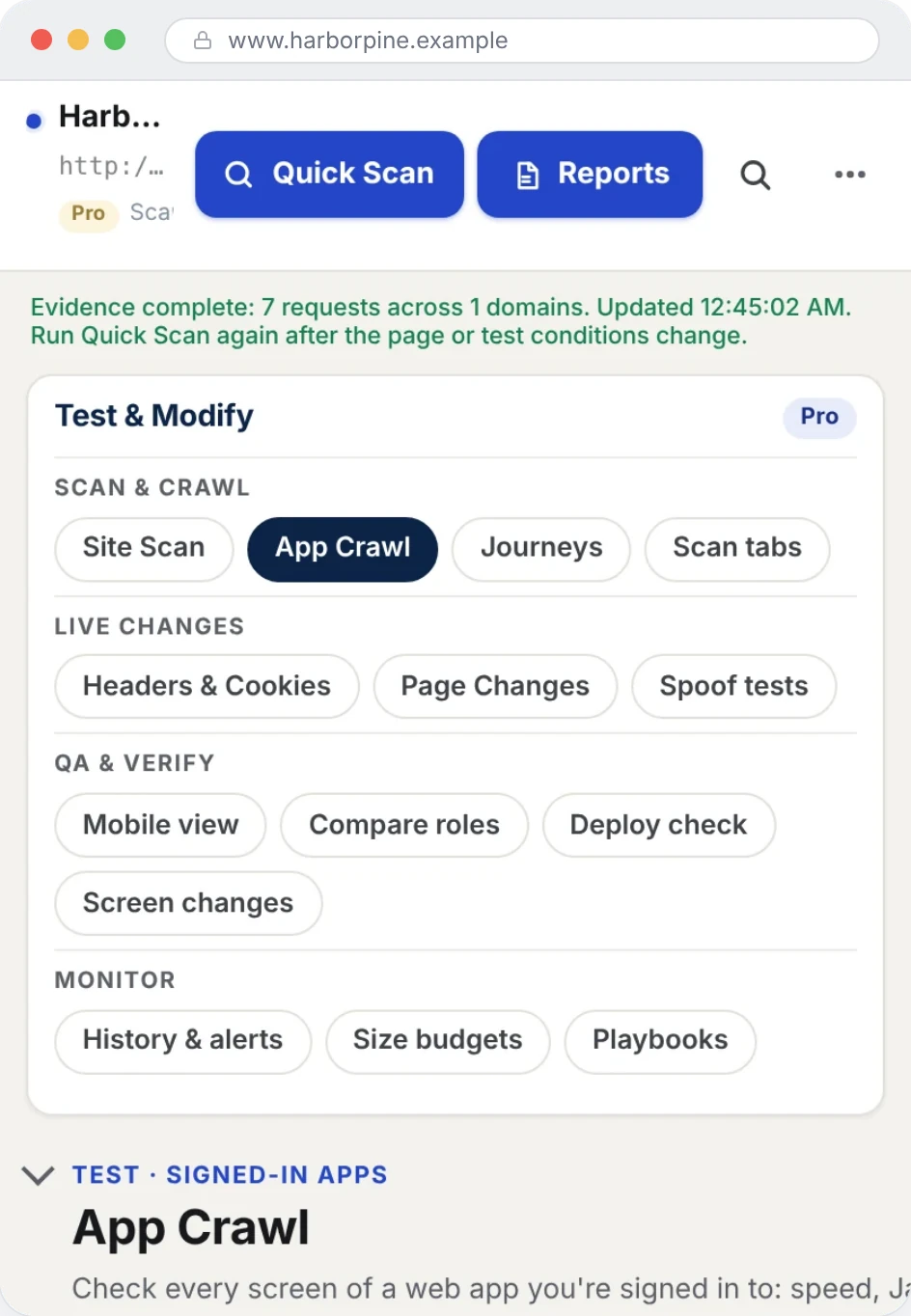
Check every screen of a web app you're signed in to, up to 100 screens. JavaScript errors, failed and slow API calls, page weight and accessibility, ranked by how many screens each problem affects.
Pro
Every API, inventoried
Every API call your screens make, how each is protected, the shape of what it returns and what changed since earlier scans. New endpoints and sensitive-looking fields are flagged.
Pro
Deploy check
Save a snapshot, ship, rescan. Console errors, failed requests, speed and every new or changed file, as one list of regressions and improvements. Copy it as a GitHub issue or PR comment.
Pro
Compare two roles
Save the same screen as an admin and as a viewer. EPIC lists the menus, actions, fields and API answers the viewer can still see.
Pro
Screen changes
Time every in-app screen change while you use the app, and catch slow clicks, long freezes and memory that keeps growing.
Pro
Size budgets
Limits for page size, JavaScript, images, fonts, third parties and requests, checked on every scan and crawl, with an alert when one breaks.
Pro
Every file, every size
New, removed and grown files between scans, down to 1 KB. Renamed builds such as app.3f9a.js → app.7d2e.js are matched, so you see “app.js grew 240 KB”, not noise.
Pro
API & session security
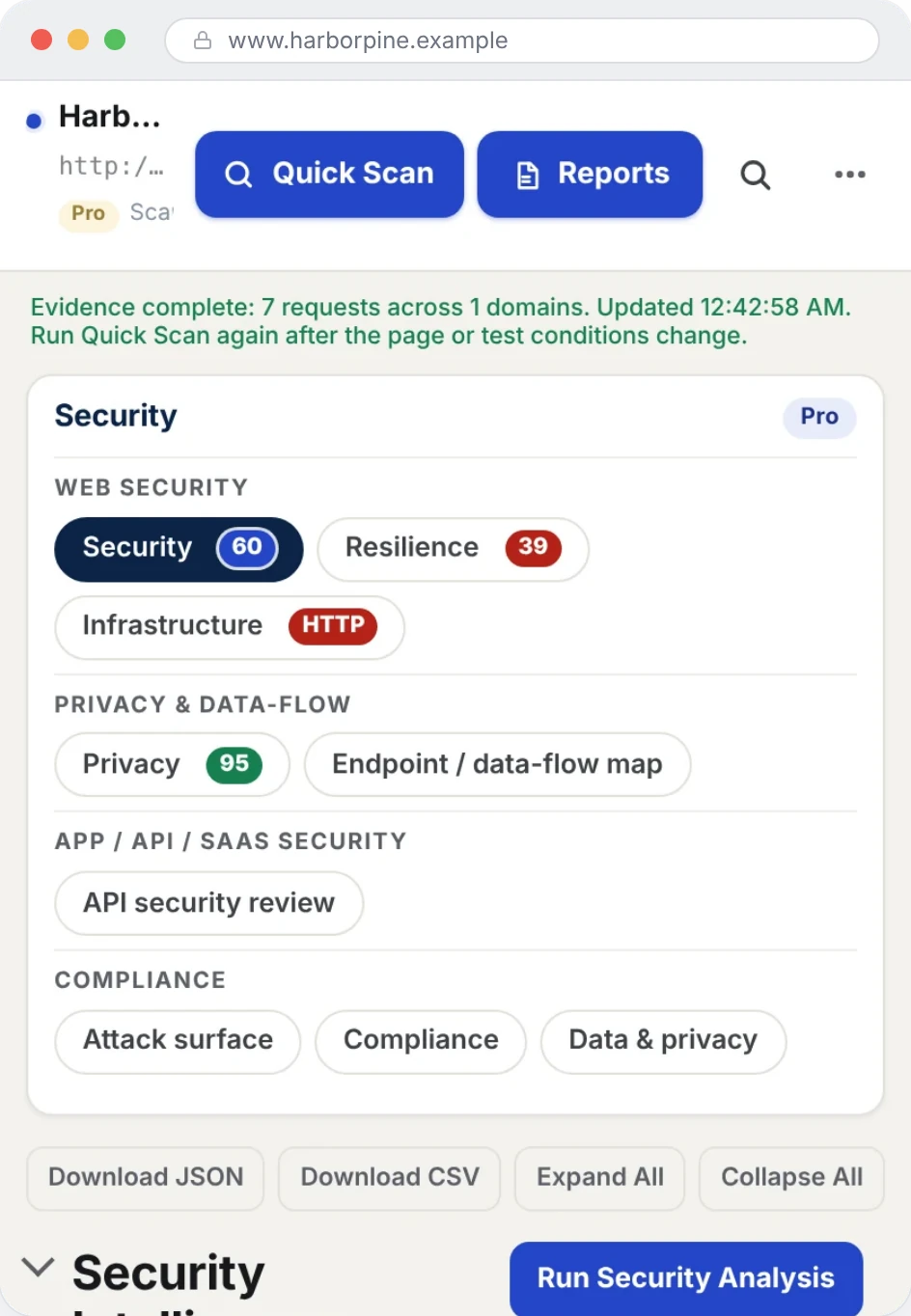
CORS that lets other sites read your API, JWT weaknesses, tokens in browser storage, session cookie flags, keys exposed in client code, public source maps and security headers with fixes.
Pro
Journeys inside apps
Record a flow once and EPIC re-checks it. Data-loading requests such as search are let through, while anything that saves or sends is held.
Pro
The HTTP/API Lab
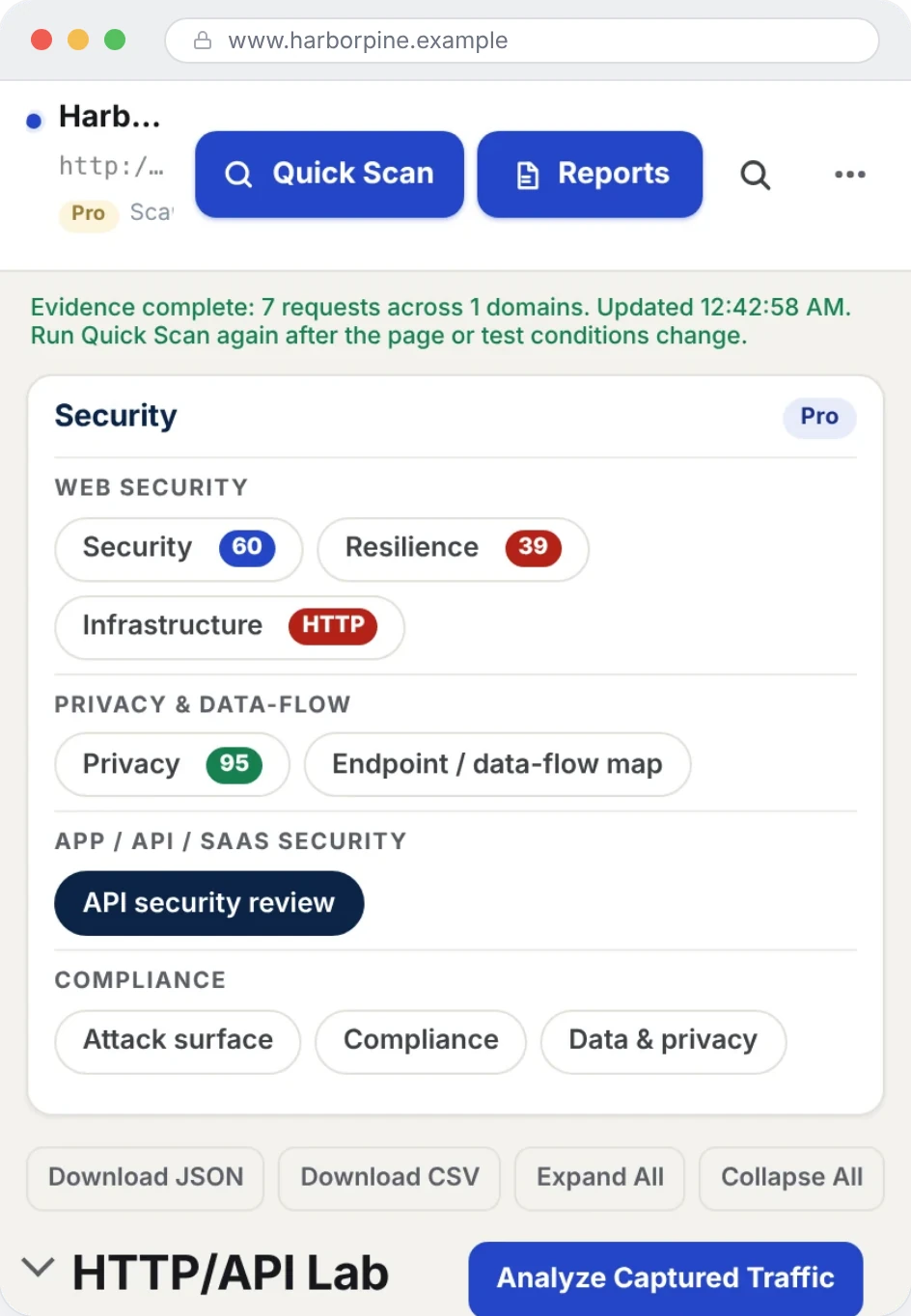
REST, GraphQL, SOAP, OData and WebSocket calls with status, timing and authentication. Edit and resend any request, and copy it as cURL, fetch or Python with secrets masked.
Free
Works where you're signed in
Quick Scan, App Crawl and journeys use your existing session, so they check the real app, not the sign-in page. Nothing is sent to us.
Pro
Test fixes and flags
Change request and response headers, cookies (feature flags, sessions), HTML, CSS or JavaScript, or block a script, in your own browser only.